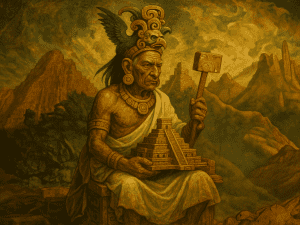
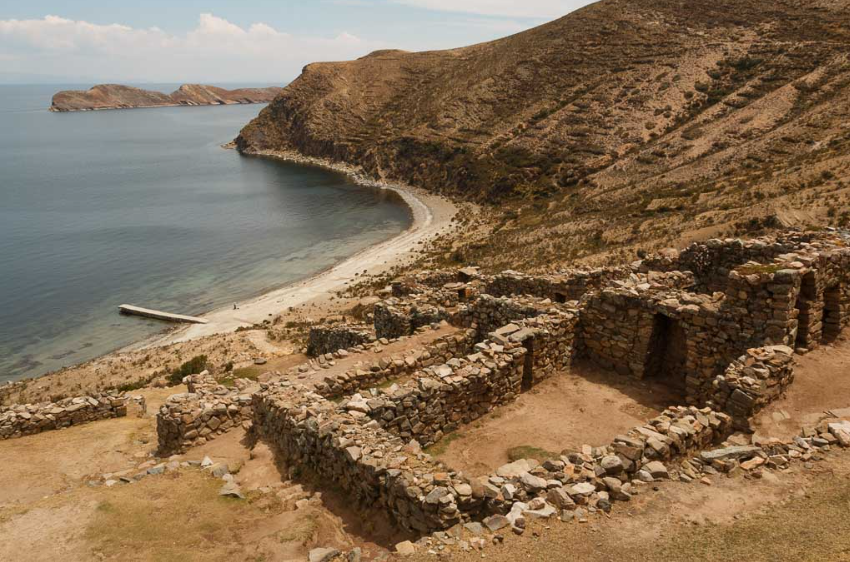
In Bolivia, on the shores of Lake Titicaca (shared with Peru), lies one of the world’s most fascinating enigmas. A place where history and myth not only intertwine… but seem to be one and the same.
Because here, on Lake Titicaca, a culture wasn’t simply born.
According to ancestral traditions… the gods were born.
At over 3,800 meters above sea level, this sacred lake is home to two key sites: the Island of the Sun and the Island of the Moon. For the Incas, these places weren’t just territories: they were the cradle of their civilization, the place where it all began.
However, something doesn’t quite add up.
Long before their expansion, another culture already dominated these lands: Tiwanaku. A civilization that, even today, defies our understanding.
Puma Punku: impossible engineering

Within the Tiwanaku complex lies one of its greatest mysteries: Puma Punku
Stone blocks weighing several tons, cut with a precision reminiscent of modern techniques. Perfect fits. Millimeter angles. Surfaces polished with an accuracy that seems impossible for a civilization from over 1,500 years ago.
How did they transport those stones?
How did they achieve those cuts without advanced tools?
Are we looking at ancient engineering… or lost knowledge?
Some researchers suggest that the official dating might not tell the whole story. That perhaps Tiwanaku didn’t build Puma Punku… but rather inherited much older structures.
And if that were true, the question becomes even more unsettling:
Who really built it?
Beneath the waters: a submerged history?
Lake Titicaca holds secrets not only on the surface. Beneath its waters, some expeditions have indicated the possible existence of submerged structures.
Remains of what could have been an ancient city.
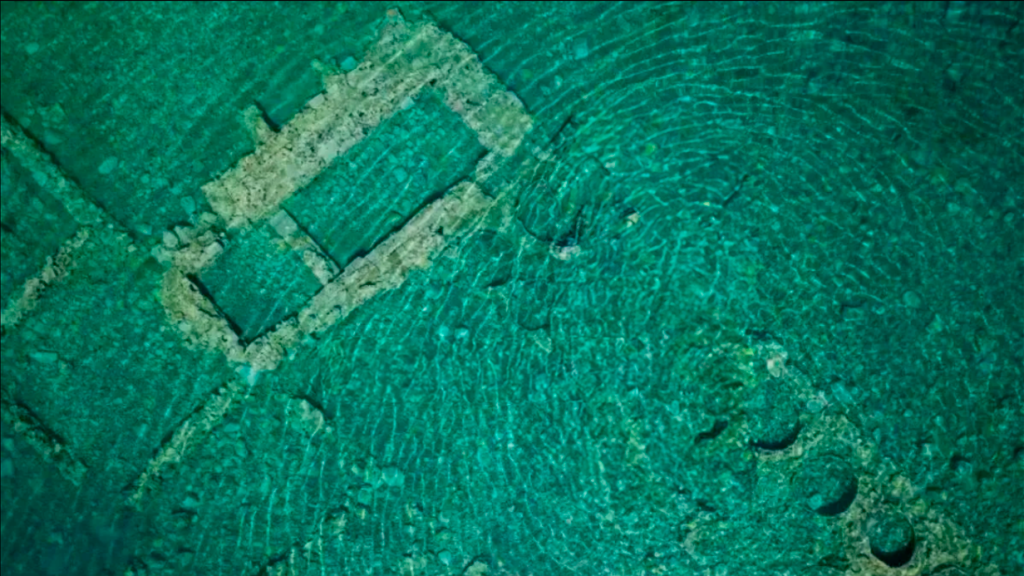
If this is confirmed, it would imply that the history of this region is much older than we think.
Perhaps we are not discovering the past… but remembering it.
Fragments of knowledge. Symbols. Stories that have survived time, passed down as myths.
But…
what if some of those myths weren’t just metaphors?
Viracocha and the origin of the world
Before the Incas, the Tiwanaku themselves spoke of the origin of the world in Lake Titicaca.
Its creator was Viracocha, a deity who emerged from the waters to shape the world.
According to their accounts:
- First, he created a race of giants
- But these were destroyed by the god himself
- Then, he created human beings
This pattern is not unique.
It appears, with variations, in cultures all over the world.
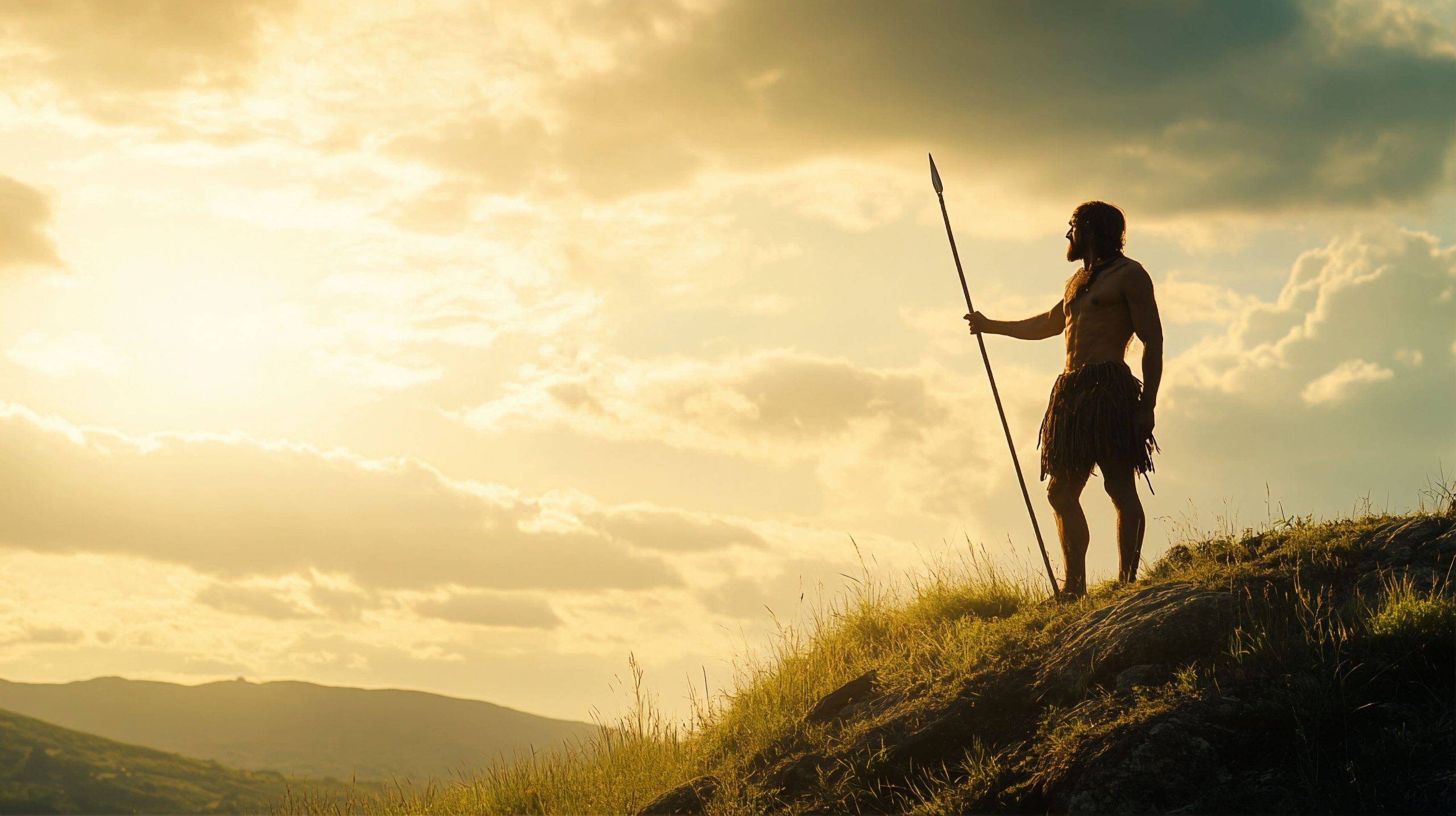
Giants in all cultures: coincidence or memory?
In Norse mythology, the Jotun represent primordial forces
The Aztecs mention the Quinametzin
The Maya, in the Popol Vuh, describe the first imperfect humans
In India, the Asuras and Rakshasas
In Japan, the Oni
In China, the giant Pangu
The idea of a race of giants is not unique to any one civilization. It appears in multiple traditions:
In the Bible, Genesis speaks of the Nephilim, born from the union of “sons of God” and humans.
In Greek mythology, the Titans and Giants preceded the Olympian gods.
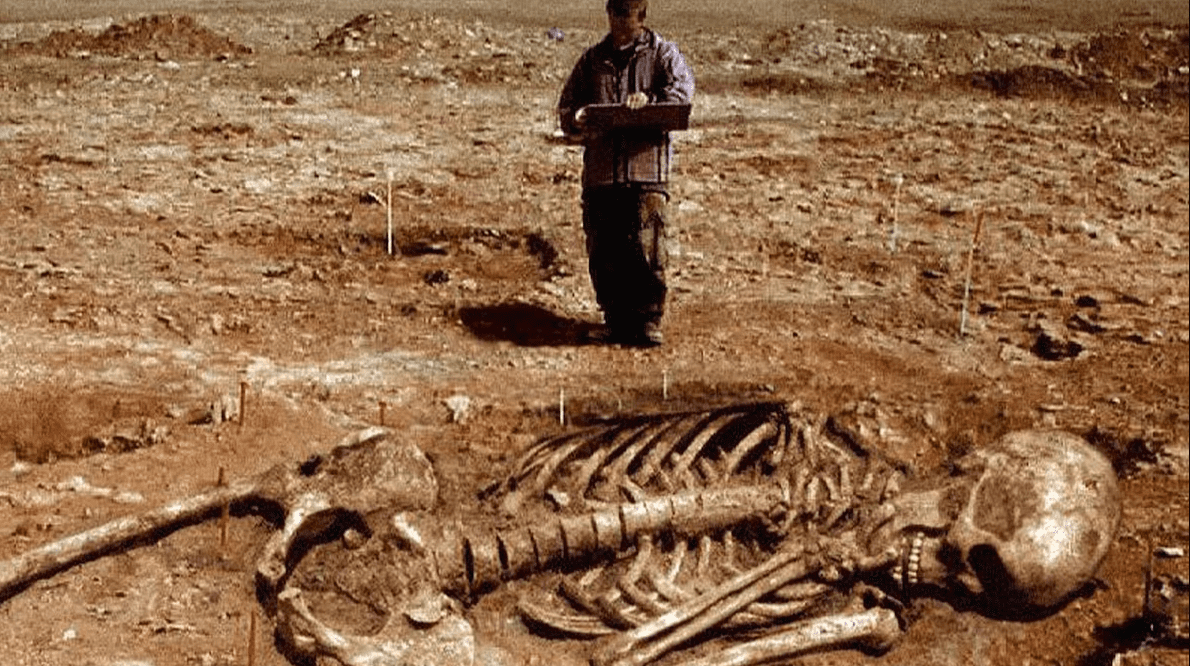
And not only in stories.
From Malta to Scotland, and across Asia and the Americas, there are colossal structures whose authorship remains a subject of debate.
Why do so many cultures, with no contact between them, share the same idea?
@margaritaarnalmoscardo NO encaja- BOLIVIA y el principio de los dioses y gigantes. El inicio en el lago tikicac, multiples culturas de todo el mundo contando la misma historia. Mito o realidad?... Hablar claro, NO ENCAJA, lo que nos cuentan con lo que ven nuestros ojos. viaja conmigo al inicio de la historia y decide, cual es la realidad.#culturaorigenes #margaritaarnal #origendelahumanidad #feenlahumanidad #misteriosdelmundo #angelesydioses ♬ sonido original - Margarita Arnal Moscardo
The most widely accepted explanation is clear: they are myths.
But there is another possibility.
That the myths are distorted memories of a forgotten reality.
If a previous civilization once existed—a “mother civilization”—the passage of time could have fragmented its legacy into symbolic stories.
In that context, the so-called “gods” could have been beings with advanced knowledge. And the “giants”… perhaps they are not an invention, but an interpretation.
Even more provocative an idea arises:
What if humankind is the result of an alteration… of an experiment… of an intervention?
This would open up new questions:
- Where does our capacity for violence truly come from?
- Why do so many cultures speak of gods in conflict?
- Are we repeating ancient patterns?
Remembering the Forgotten
There is an idea that is repeated in many traditions:
That some people are destined to remember.
To awaken.
To understand what others do not see.
Perhaps it is not about accepting everything without question… but neither is it about automatically rejecting it.
Because history, as we know it, could be incomplete.
And Lake Titicaca… could be one of its key pieces.