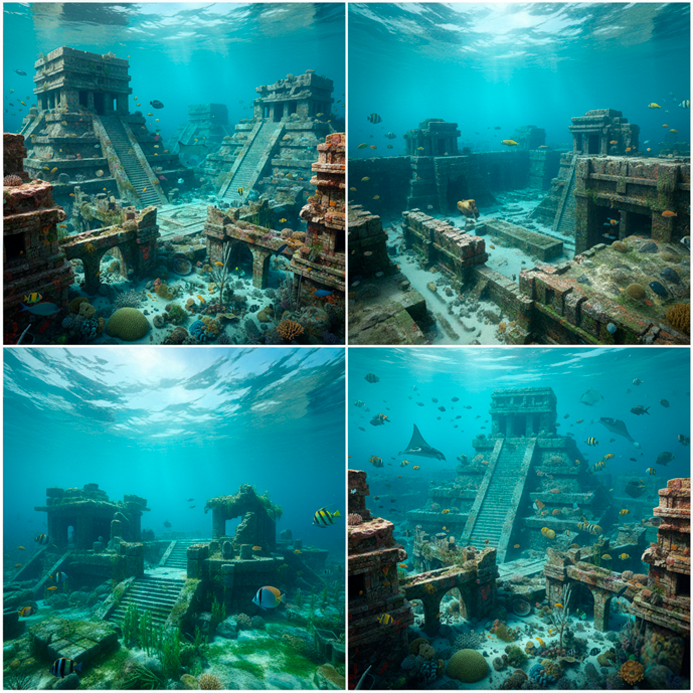
Under the sea, there is more than just silence.
There are structures. There are walls. There are geometric shapes that shouldn’t be there.
Pyramids, terraces, causeways, stone alignments. Constructions that seem too precise to be mere geological whims. And yet, official history maintains that more than 14,000 years ago, humanity barely survived in small groups of hunter-gatherers.
Then the inevitable question arises:
If there were no advanced civilizations… who built these underwater cities?
From the mysterious Dragon Triangle in Japan to the depths off the coast of Cuba, passing through the legendary Dwarka in India and the sacred waters of Lake Titicaca in Peru, different points on the planet seem to whisper the same forgotten story.
A story that the ocean has yet to fully reveal.
Yonaguni and the Dragon's Triangle: the pyramid under the sea
Off the coast of Japan, near Yonaguni Island, lies a colossal structure between 18 and 30 meters deep that has baffled researchers and divers for decades.
It is a stepped formation with five levels, featuring wide terraces, carved staircases, and surprisingly straight surfaces. Its size is roughly equivalent to two football fields. In addition, engravings and a stone figure about seven meters tall, eerily reminiscent of a sphinx, have been identified.
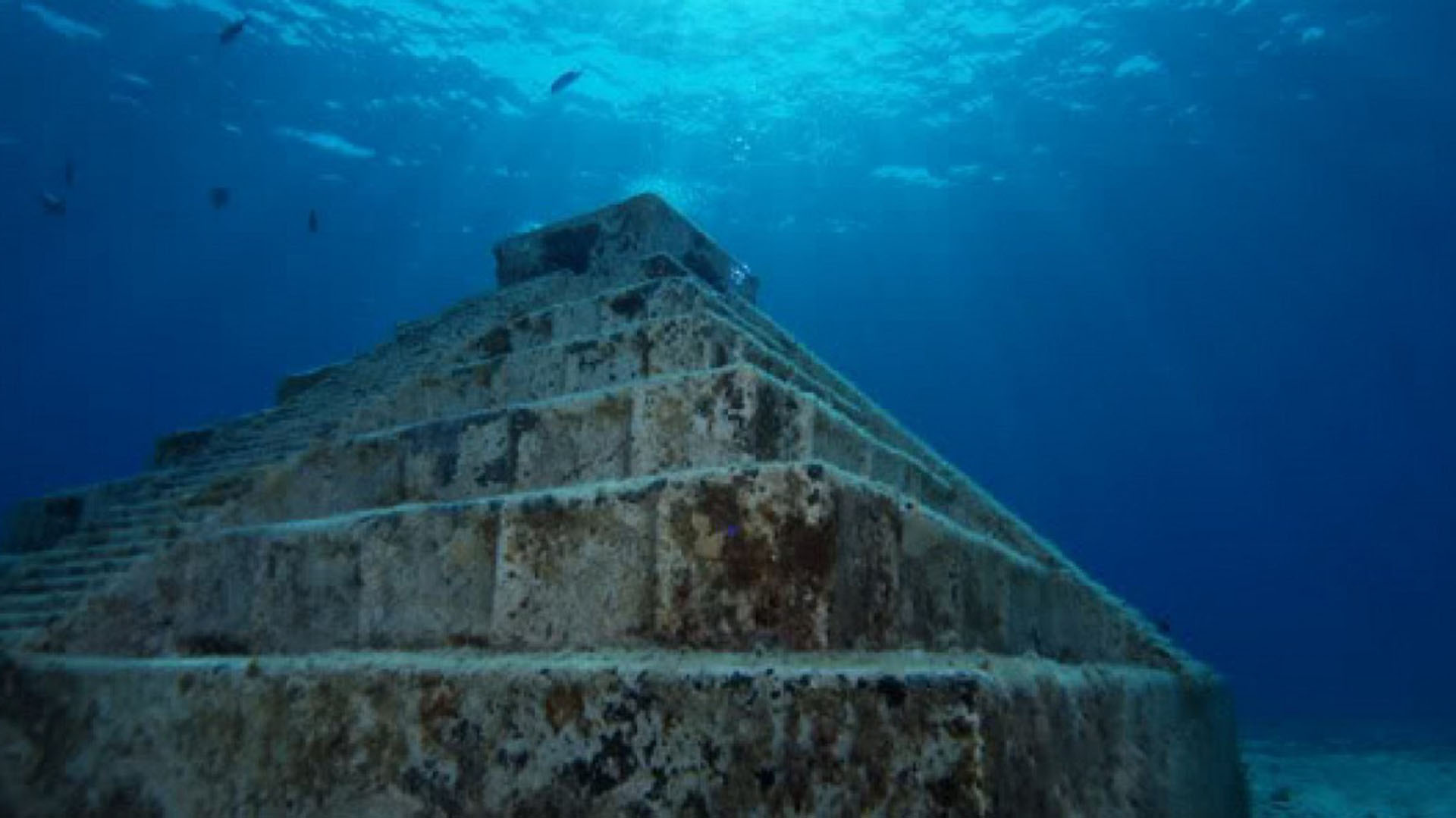
Geological studies indicate that this area was submerged after the end of the last Ice Age, more than 14,000 years ago, when sea levels rose dramatically.
The problem is obvious.
According to the dominant historical paradigm, societies capable of erecting monumental structures of this type did not exist at that time.
The region where Yonaguni is located is known as the Dragon’s Triangle, an area of the Pacific associated with unexplained disappearances of ships and planes, similar to the Bermuda Triangle. Official explanations cite intense tectonic activity, unpredictable ocean currents, and extreme natural phenomena.
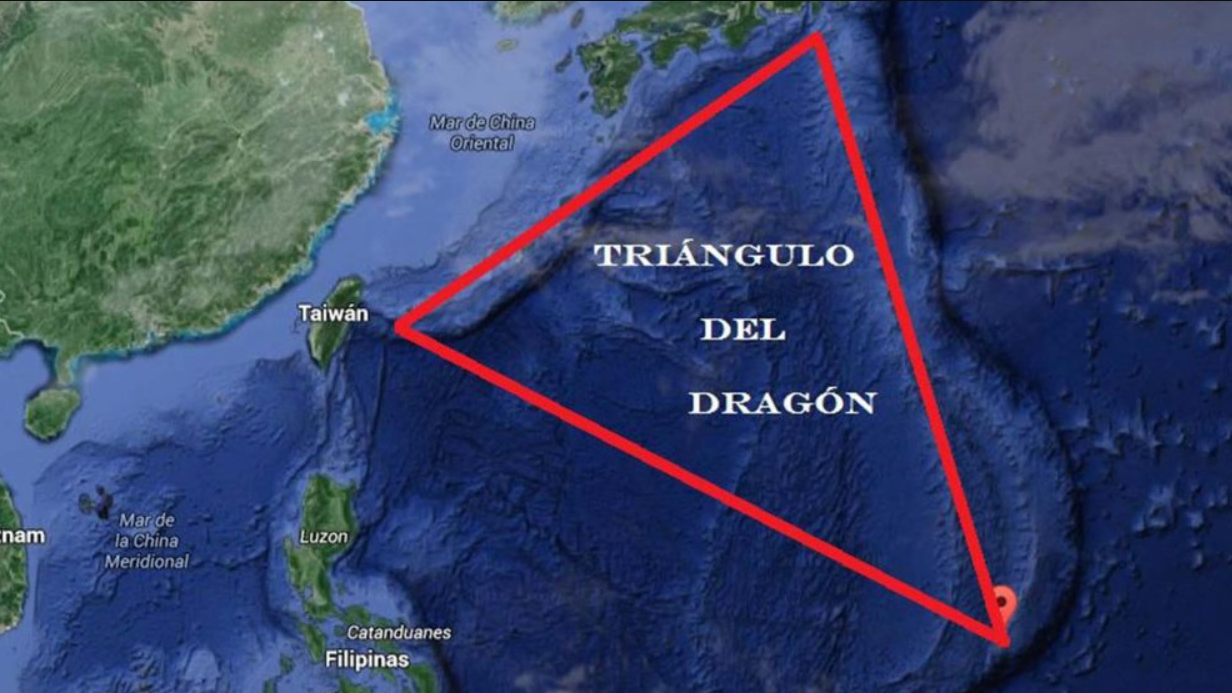
But the coincidence between geographical anomalies and underwater structures continues to fuel the mystery.
Are we looking at a naturally eroded formation with geometric shapes?
Or at the remains of a civilization forgotten by time and the sea?
The submerged city off the coast of Cuba: 800 meters below the ocean
In 2001, underwater explorations off the western coast of Cuba detected, at a depth of approximately 800 meters, what appeared to be a complex network of geometric structures.
Underwater robots recorded rectilinear alignments, organized blocks, and formations reminiscent of walls and pyramids. These are not simply scattered rocks, but patterns that suggest planning.
What is most unsettling is their depth.
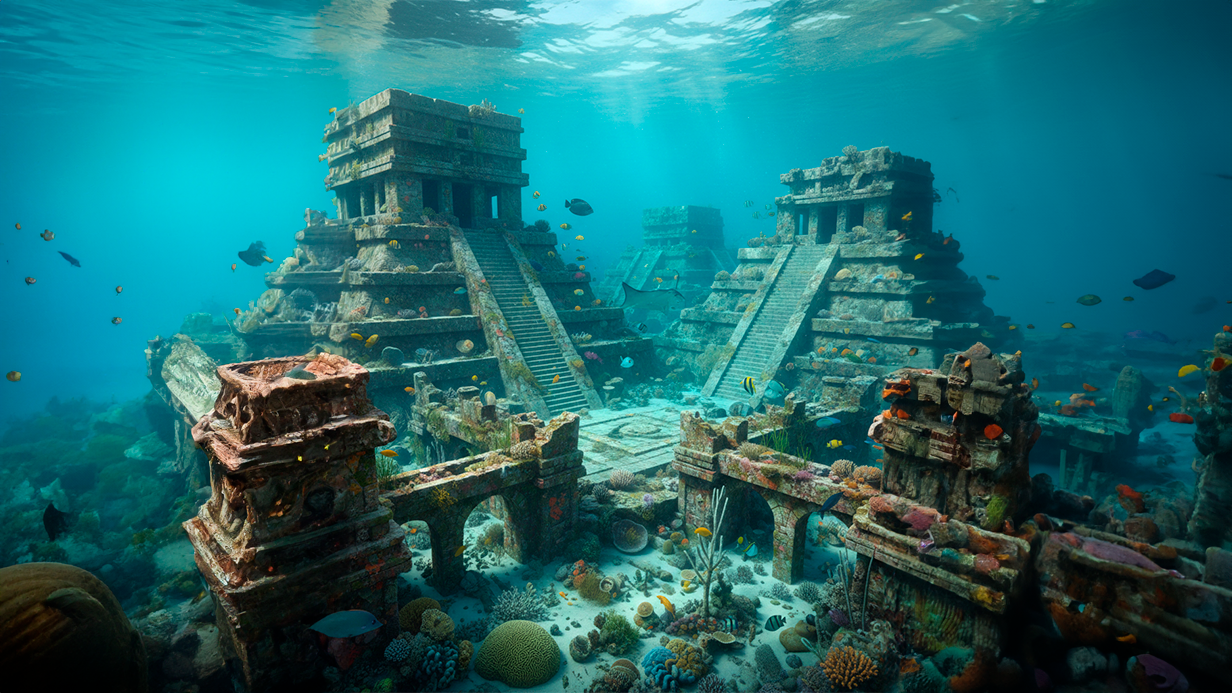
For these structures to have ever been above ground, sea levels would have had to be radically different or major tectonic movements would have had to occur.
Some researchers have suggested they could be thousands of years old, although the lack of direct excavations keeps the debate open.
There is another detail that fuels the mystery: this area is aligned approximately on the same parallel as the Bermuda Triangle and the Dragon’s Triangle.
Three regions of the planet associated with anomalies and disappearances.
Dwarka in India: when myth emerges from the ocean
For centuries, ancient Indian texts spoke of Dwarka, the city of the god Krishna, destroyed after an epic war and swallowed by the sea.
Many considered this story a symbolic myth.
However, underwater explorations off the coast of Gujarat state and in the Gulf of Cambay have revealed the remains of submerged structures that some identify as ancient cities.
Official dating places some of these findings several thousand years old. However, some bolder hypotheses suggest much earlier dates, which would raise profound questions about the early development of complex civilizations in the Indian subcontinent.
Lake Titicaca in Peru: ruins at almost 4,000 meters high
High in the Andes, between Peru and Bolivia, Lake Titicaca holds another enigma.
Beneath its waters, walls, paving stones, and sculptures have been found, suggesting the existence of ancient structures now submerged. Local traditions speak of a lost city, of giants, and of a primordial era when the stars descended upon the lake.
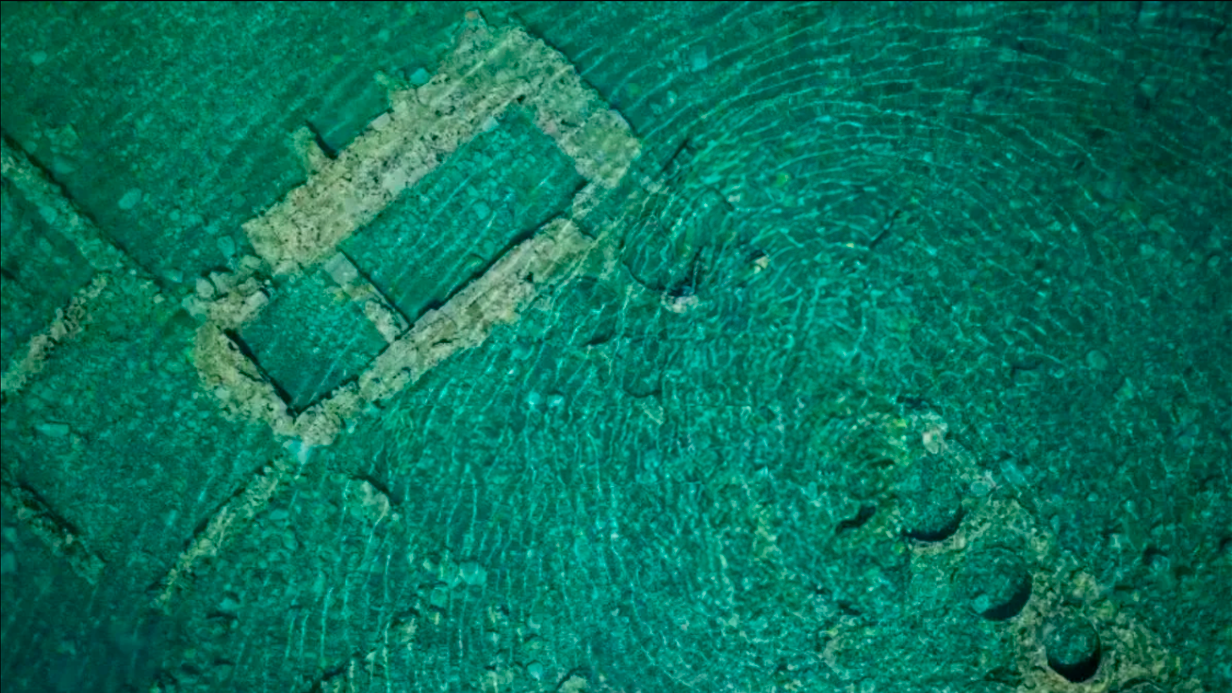
From a scientific perspective, the lake has experienced variations in its level over thousands of years. Some areas that are now underwater may have been exposed in the past.
But the symbolism persists.
Lake Titicaca is not just a body of water. It is a sacred center for Andean cultures, associated with the origin of the world and humanity according to their worldview.
And once again the pattern emerges:
Water.
Structures.
Submerged memory.
The ocean as an archive of humanity
Yonaguni.
Cuba.
Dwarka.
Lake Titicaca.
Four distant points on the planet. Four landscapes where water covers structures that seem to defy established chronology.@margaritaarnalmoscardo MUNDOS PERDIDOS-video-export-2026-02-23T17-31-09.262Z
♬ sonido original - Margarita Arnal Moscardo
The question isn’t whether it’s all a supernatural mystery.
The real question is how much of our past remains hidden beneath the sea.
For decades, archaeology focused on land. But if sea levels rose more than 100 meters after the last ice age, vast stretches of coastline—precisely where the first civilizations often arose—were submerged.
Perhaps the ocean doesn’t hold fantasies.
Perhaps it holds memories.
And we’re only just beginning to listen to them.
Exploring submerged cities doesn’t mean rejecting science.
It means expanding the field of research.
It means accepting that our understanding of the past is constantly being revised.
Some theories will be discarded.
Others will evolve.
And some, perhaps, will completely change what we think we know about the origins of civilization.
Because history isn’t a closed book.
It’s a process.
And under the sea… there may still be pages to be read.