
Throughout history, many prophecies have announced the end of the world. However, those that never came true are rarely discussed. A clear example is the famous Mayan prophecy of December 21, 2012, which many interpreted as an apocalyptic date. The result? Not only did the world not end, but we advanced technologically as humanity.
What did the Mayan calendar really say?
The Mayan calendar is a complex system that combines several interrelated time cycles, used for both ceremonial and astronomical purposes:
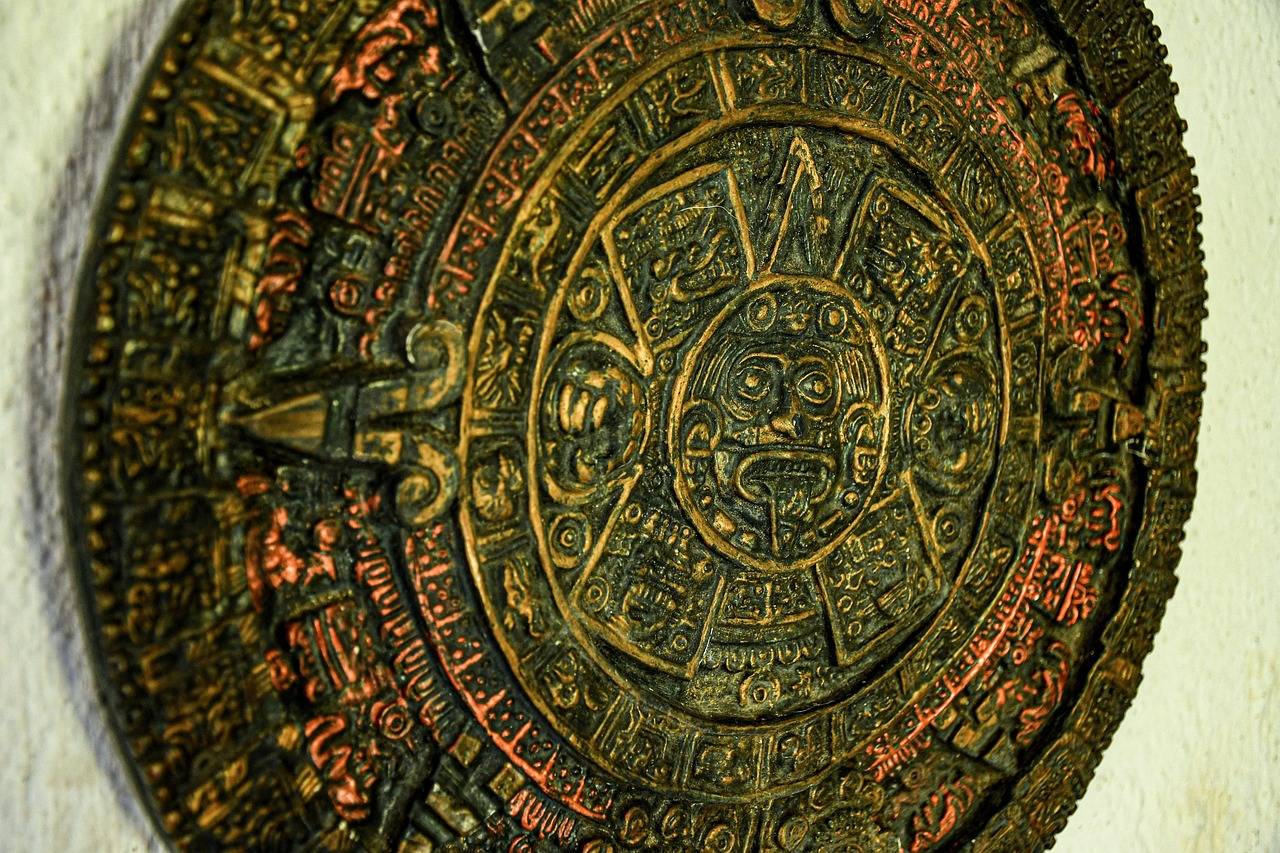
Tzolk’in: A sacred 260-day calendar based on combinations of 20 signs and 13 numbers. It was used in religious rituals and divination practices.
Haab’: A 365-day solar calendar, divided into 18 20-day months plus a final 5-day period called Wayeb’, considered unlucky. It was used for civil life and agricultural activities.
Long Count: A system used to record historical events over thousands of years. It uses units such as baktun (144,000 days), katun (7,200 days), or tun (360 days).
When the Tzolk’in and the Haab’ were synchronized every 52 years, the Mayans considered it a sacred cycle of great importance.
The Truth About 2012: A Misinterpreted Prophecy?
Experts in Mayan culture have debunked the idea of the end of the world. December 21, 2012, simply marked the end of a great cycle within the Long Count, similar to how we celebrate the end of a millennium in our Gregorian calendar.
The confusion was fueled by a modern, sensationalist interpretation, far removed from the true astronomical and spiritual significance the Mayans attributed to their calendars.
Gregorian Calendar vs. Mayan Calendar
The Gregorian calendar, introduced in 1582 by Pope Gregory XIII, is the most widely used solar system today. It corrects the errors of the Julian calendar and regulates our civil life.
The Mayan calendar, on the other hand, is based on sacred and astronomical cycles, deeply linked to religious ceremonies and observations of the cosmos.
What do other prophecies say about the end of the world?
@margaritaarnalmoscardo EL CALENDARIO MAYA #crecimientopersonal #BIOENERGIA #TAROT #VISUALIZACION #MEDITACION #ZEN #psiquicas #VIDENCIA #HISTORIA #REENCARNACION #TIBET #VIAJEASTRAL #TAROTEGIPCIO #MARGARITAARNAL #ENERGIA #OVNIS MUFON #MEDIUM #CALENDARIOMAYA #profecias #biblias
♬ sonido original - Margarita Arnal Moscardo - Margarita Arnal Moscardo
While science doesn’t predict any imminent threat of extinction, it does warn about real risks such as climate change, global pandemics, and the impact of human activity on the planet. On the other hand, biblical prophecies mention signs such as earthquakes, eclipses, plagues, and phenomena in the sky.
The Book of Revelation speaks of the second coming of Jesus Christ as a decisive event, where Christ will return as King and Judge to establish his eternal kingdom.
If you believe that the end of the world is not near and that we can still change things, building a better future is possible.
Knowledge, collective consciousness, and spiritual awakening are more urgent than ever.