

What happens when the loose pieces of the past begin to fit together into a global pattern?
Pyramids in Egypt, Mesoamerica, China, Indonesia, India, the Canary Islands, Bosnia, Cuba… underwater structures in Japan, formations in Wisconsin, and even supposed pyramids emerging from the ice in Antarctica.
Traditional archaeology holds that civilizations arose independently, developing their monumental architecture autonomously according to their religious, political, or symbolic needs. However, the accumulation of pyramidal structures distributed across the globe has led some researchers to propose an alternative hypothesis: What if they weren’t isolated developments, but rather fragmented manifestations of a shared, prior knowledge?
Were they all invented by distinct cultures, without contact between them?
Or are we looking at the scattered remnants of a common, forgotten knowledge?
The Great Pyramid and ancient technical knowledge
The Great Pyramid of Giza is the most studied example. Its geometric precision, its almost perfect orientation to true north, and its possible symbolic relationship with constellations like Orion or with the star Sirius have been extensively documented. It is not a matter of debate that the Egyptians possessed advanced knowledge in mathematics, engineering, and astronomy.
What does generate discussion in certain circles is the possibility that these structures are older than the official chronology indicates (around 2560 BC). To date, the dates accepted by the scientific community support this chronology. However, the periodic appearance of alternative studies keeps alive the question of whether the story might be more complex.

The debate revolves not only around age, but also function. Traditionally, they are considered monumental tombs associated with pharaonic power. However, theories have emerged proposing additional functions: astronomical observatories, acoustic ceremonial centers, or even structures related to energetic phenomena. These latter hypotheses are not supported by conventional archaeology, but they form part of the contemporary debate in the field of alternative research.
A global pattern: common coincidence or inheritance
The presence of pyramidal structures on different continents is a fact. Egypt and Sudan have dozens. Mesoamerica developed monumental complexes such as Teotihuacan and Chichen Itza. China has lesser-known pyramids in the Shaanxi region. In Indonesia, Gunung Padang has generated controversy due to its potentially ancient dating. In Bosnia, pyramid-shaped hills have been studied, but their artificial nature is debated. In Japan, the Yonaguni underwater structure divides opinions between geologists and archaeologists.
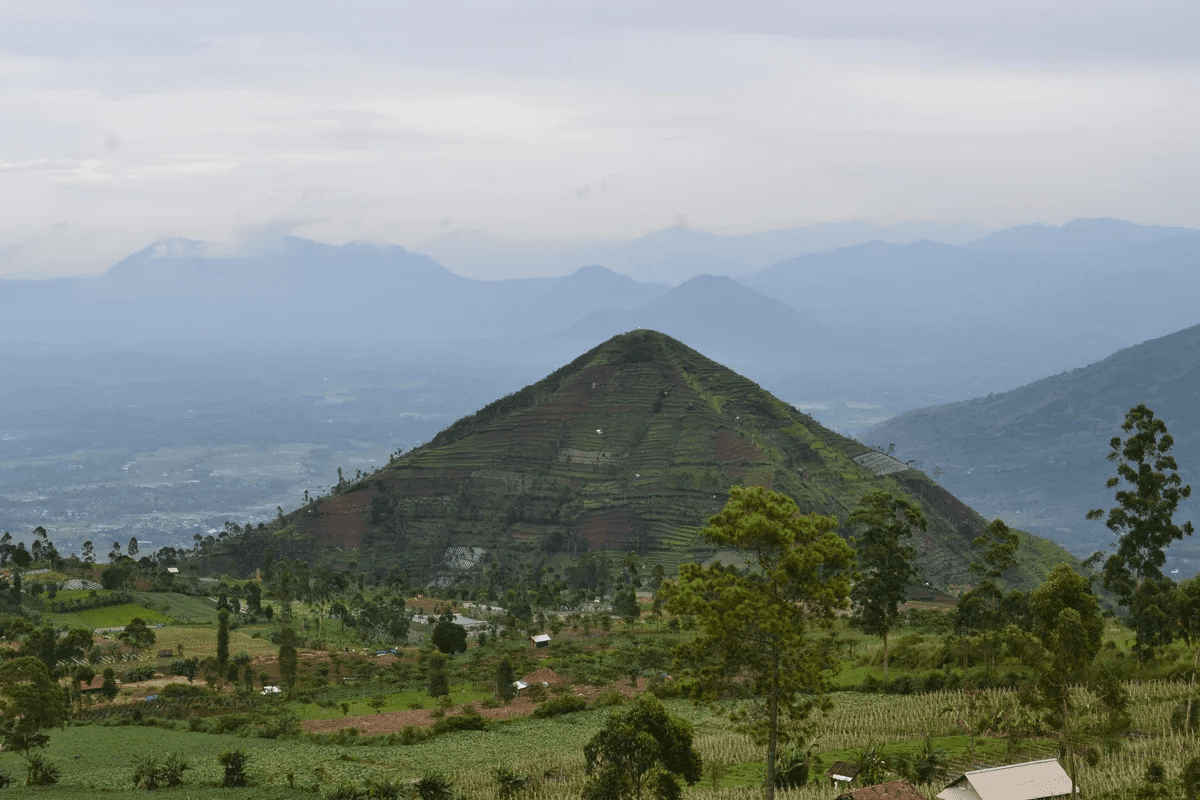
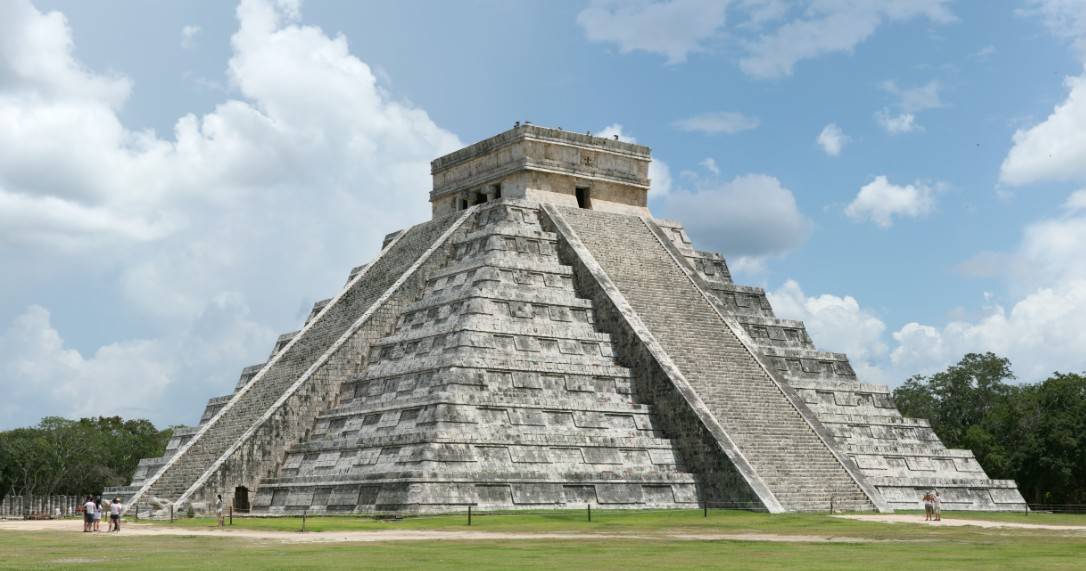

The key question is not whether pyramid-shaped structures exist (that’s obvious) but whether they share a common cultural or technological origin. The most widely accepted academic explanation is convergent: the pyramid shape is structurally stable and efficient for building tall structures with ancient technology. Different cultures could have arrived at similar solutions without contact.
However, when analyzing astronomical alignments, recurring geometric proportions, or strategic geographical locations, some researchers believe there might be more than just coincidence. This is where speculation about a possible ancient cultural network
Gunung Padang, submerged structures and Antarctica
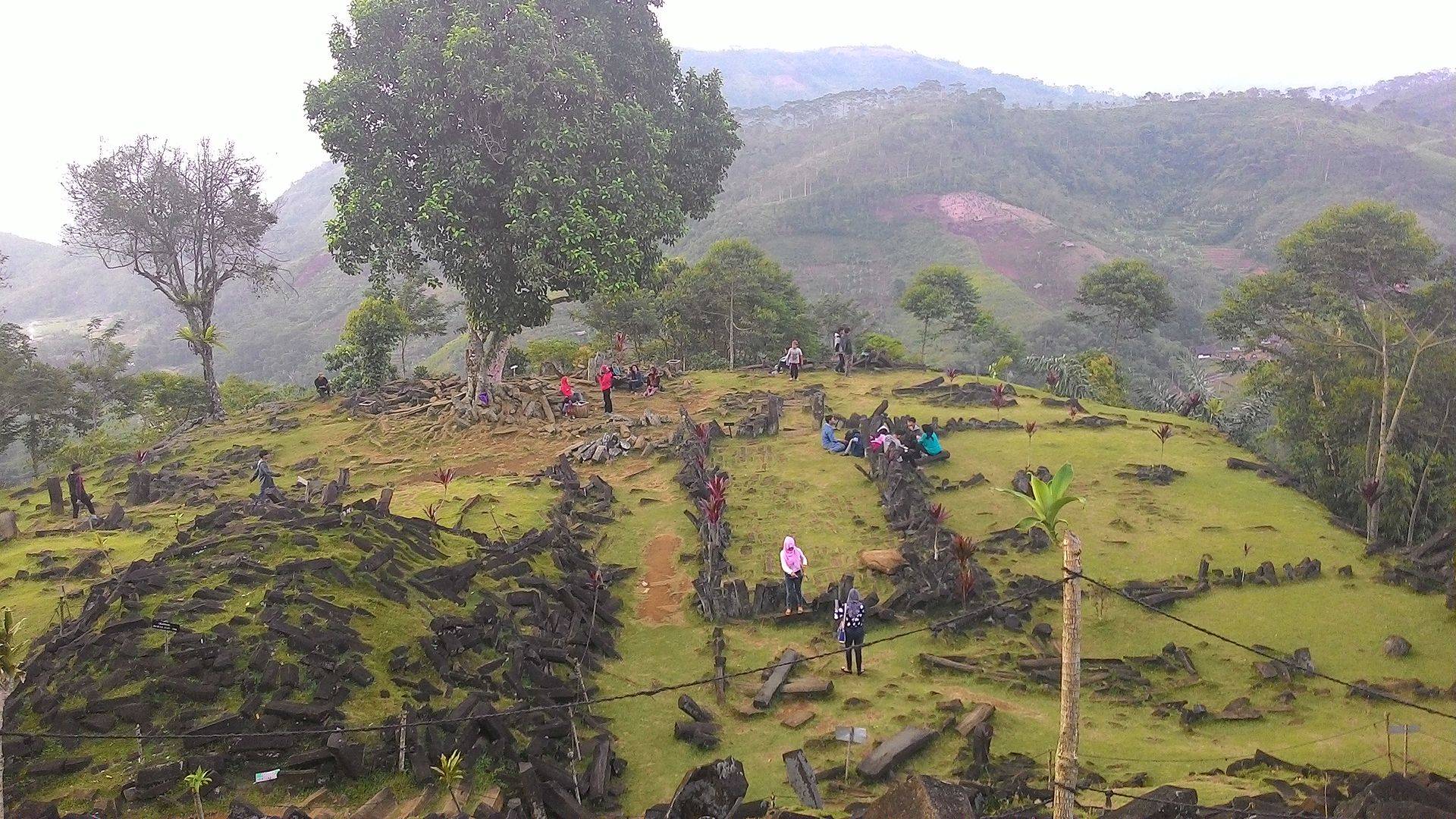
Gunung Padang, in Indonesia, has been the subject of studies suggesting construction phases that could date back more than 10,000 years. These conclusions are debated within the scientific community, but if artificial structures predating the end of the last Ice Age were ever confirmed, the historical chronology would need to be revised.
Submarine formations have also been reported in Cuba and Rock Lake (Wisconsin), as well as satellite-visible structures in Antarctica. In most of these cases, the prevailing explanation is geological. Antarctic pyramidal formations, for example, are interpreted as nunataks shaped by glacial erosion.

However, the mere suggestion of an artificial structure beneath layers of ice over 100,000 years old would open up a radical scenario: it would imply an extremely ancient human civilization or a complete revision of what we know about the cultural development of Homo sapiens.
To date, there is no confirmed scientific evidence to support this possibility.
The Flood, Zep Tepi and mythical memory
Beyond archaeology, there is a common element in many ancient traditions: the story of a previous golden age followed by a great catastrophe. In Egypt, the concept of Zep Tepi (“The First Time”) describes a primordial time before the pharaohs. In Greece, we find the myth of Atlantis. In Indian tradition, there is Kumari Kandam. Many cultures speak of a great flood.
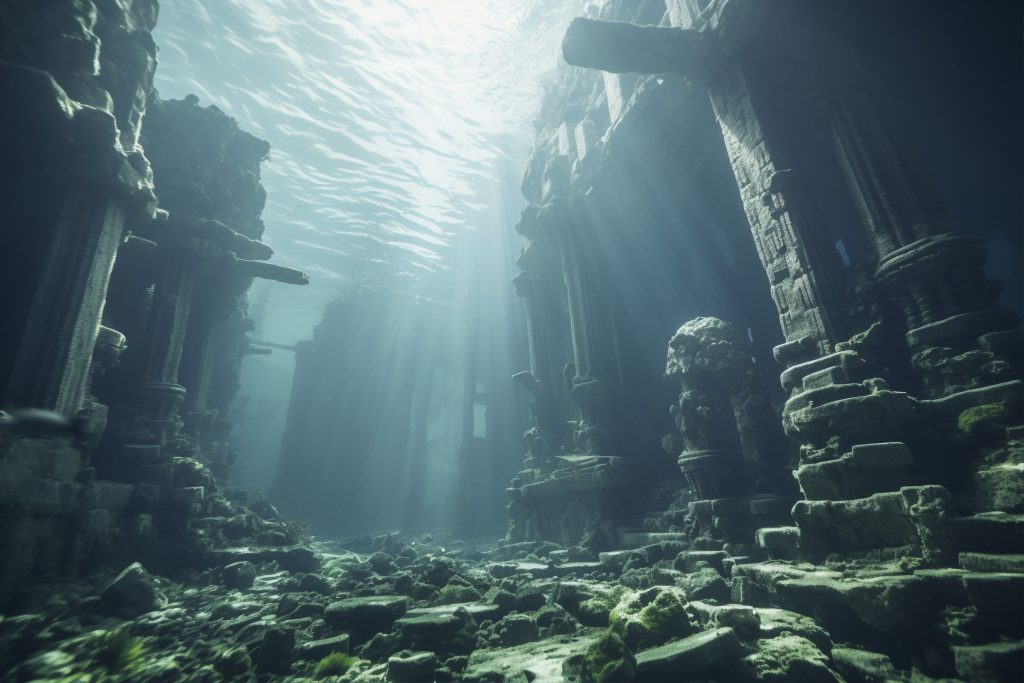
From a geological perspective, we know that at the end of the last Ice Age, significant sea-level rises and abrupt climate changes occurred. What has not been proven is the existence of a prior global technological civilization destroyed by these events.
However, the repetition of this mythical motif raises an interesting question: are these simply symbolic narratives or distorted cultural memories of real events?
Power plants or symbolic architecture?
One of the most striking theories maintains that the pyramids could have functioned as interconnected power plants. It mentions small-scale experiments, the presence of materials like mica in Teotihuacan, and electromagnetic measurements in certain structures.
There is evidence that the Great Pyramid of Giza may have functioned as a power plant. Several scientists and engineers have reproduced its structure on a small scale and obtained surprising results in their experiments.
Furthermore, in-situ measurements have been taken at the pyramids themselves, detecting residual energy traces, with figures that are, to say the least, striking.
Today, although mainstream science has not publicly acknowledged it, more and more people are They argue that the pyramids (and in particular the Great Pyramid of Giza) may have been designed as veritable power plants.
@margaritaarnalmoscardo PIRAMIDES, MISTERIO RESUELTO # #sonido #margaritaarnal #vibracionessanadoras #crecimientopersonal #vibracionespositivas #sanarconsonido #meditacion #historia #historiaoculta #TUNELESMEDIEVALES #templarios #Cataros #energiaelectromagnetica #energia #bioenergia #schumannresonance #ONDASTELURICAS #energiapositiva #energiafemenina #PIRAMIDES #EGIPTO ♬ sonido original - Margarita Arnal Moscardo
The classical view of human progress is linear: from primitive societies to complex civilizations. However, some researchers propose a cyclical model: rise, collapse, and restart.
If the existence of an advanced civilization prior to 10,000 BC were ever proven, our history would not begin in Sumeria, but would be the result of a restart after a loss.
Current genetics indicates that anatomically modern Homo sapiens has existed for approximately 300,000 years, but the documented complex civilization is barely 10,000 years old. The great gap between these two periods remains a subject of study.
With the evidence available today, we cannot affirm that a lost global civilization existed, nor that the pyramids were power plants connected as a network. But we also cannot ignore that humanity is still discovering significant parts of its past. The fundamental question is not whether the pyramids look alike
The question is whether our story began where we think it did… or if it’s simply the latest chapter of something much older.
Perhaps humanity doesn’t just progress.
Perhaps it also forgets.
Bibliography and links of interest about the great pyramids
Wikipedia (2026) “The Great Würm Ice Age”, available at https://en.wikipedia.org/wiki/Last_Glacial_Period
Altruist (2024) “Nikola Tesla and the pyramids”, in https://www.youtube.com/watch?v=8ebm6dUHA1o
Antarctica Cruises (2023) “Were pyramids really discovered in Antarctica?”, available in https://www.antarcticacruises.com/guide/antarctica-pyramids
BBC (2021) “What Yonaguni is like, the mysterious submerged “city” of Japan”, available at https://www.bbc.com/mundo/vert-fut-57300178
Cenieh.es (2026) “Direct dating of fossils”, available at https://www.cenieh.es/investigacion/lineas-de-investigacion/datacion-directa-de-fosiles
Armando Mei (2015) “36,400 BC: The historical time of the Zep Tepi theory”, available at https://www.ancient-origins.net/ancient-places-africa/36400-bc-historical-time-zep-tepi-theory-002617