
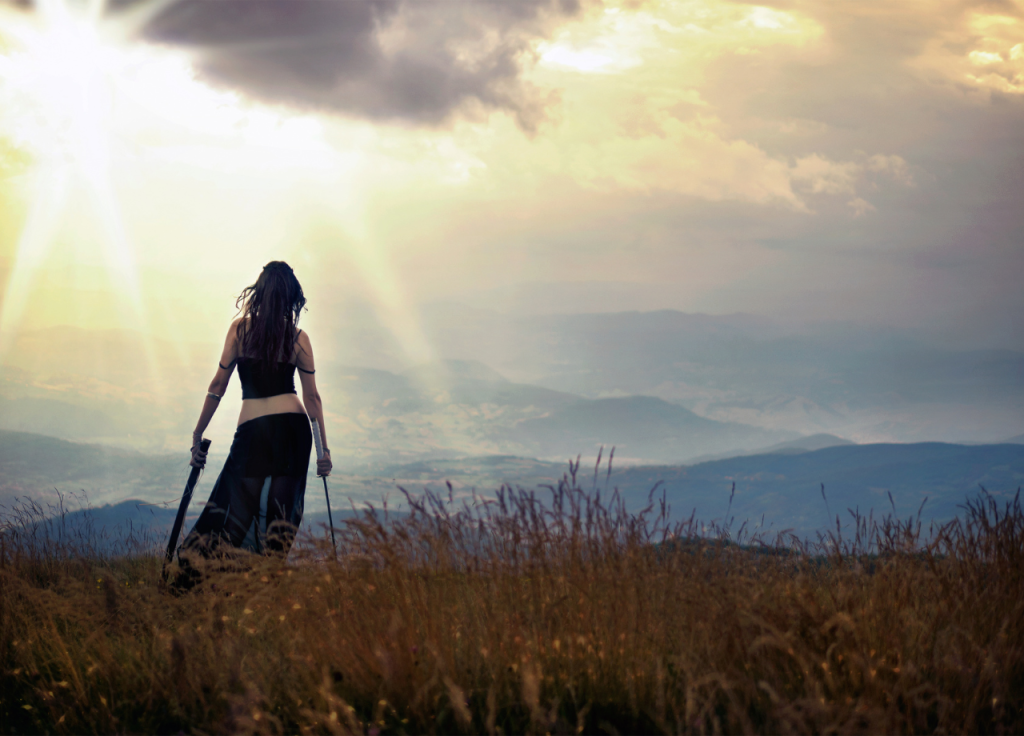

In the shadows of documented history, hides the testimony of the unwavering bravery of the Templar women, whose contribution has been intentionally silenced and erased for centuries. Often ignored by traditional historians, these women played crucial roles within the Order of the Temple, challenging the norms of a medieval society that rarely recognized their impact.
The concealment of its existence is not a new phenomenon; rather, it is a repetitive pattern in the human chronicle that attempts to erase the passage of women. Despite the scarce documentation, there are vestiges that suggest their active participation, from administrative functions to logistical support in Templar campaigns.
This article seeks to unravel the mysteries of his history, shedding light on the true magnitude of his influence and challenging predominant narratives that have underestimated his role in the crusades and human history.
Hidden existence of Templar women
Throughout history, the existence of Templar women has been a topic deliberately hidden and, at times, denied.
However, some brave chroniclers, such as the 13th century Arab Idde Abijaar, have recorded their notable participation, highlighting their bravery in the battle of Las Navas de Tolosa.
This episode, recorded in medieval chronicles, reveals that the Templar women not only participated, but also demonstrated an unwavering courage that could not be silenced by the prejudices of the time.
In an initial phase of the Order of the Temple, female warriors were allowed to participate, but later, due to prejudices and social complexes, their entry was prohibited.
Despite this, there is documentary evidence of their influence and participation, such as the entry of their names in the official records of the Order of the Temple.
These documents, kept in historical archives, corroborate the presence of women in significant roles within the Templar organization.
Roles of Templar women
In the rich and complex history of the Templars, the role of women has often been underestimated or even overlooked.
Although not all of them participated directly in combat, many Templar women played crucial roles as doctors and nurses, providing vital assistance during battles.
Her presence in conflicts was not only valuable from a tactical point of view, but also demonstrated the courage and determination that characterized these unconventional women of their time.
A notable example is the Order of the Hachet, a female military order formed in 1150, which bravely defended the city of Tortosa from Muslim forces. These women were rewarded for their bravery with unique privileges, such as tax exemption, something unusual for the time.
However, despite their contributions, in several historical documents Templar women are mentioned in ways that disassociate themselves from the Templar Order, suggesting a possible marginalization of their achievements.
This apparent dissociation highlights the need to re-examine and fully recognize the impact of these women on Templar history, validating their legacy and influence on medieval society.
Vestiges and legacy of the Templar women
The Templar women, although less known, left an indelible mark on history through the Templar castles scattered throughout Catalonia, Aragon and the Levant. In enclaves such as the castle of Sudà, Tortosa, and the castles on the Gardphens route, Mirabet, and Barberà de la Conca, located in Lleida and Tarragona, the echoes of its influence still resonate.
Panoramic Castle of Monzón with snowy Pyrenees
These physical remains are silent testimonies of the crucial role they played, beyond the commonly imagined knight in battle. Being a Templar was a commitment not only to the defense of the Holy Land, but also to community life, the administration of resources, and the safeguarding of spiritual and material treasures.
The Templar women were actively involved in the management of these strongholds, contributing to the dissemination of Christian culture and faith in turbulent times.
His legacy extends beyond the stones of castles; Their presence and actions helped define the social and economic structure of the Templar regions.
By exploring these historic sites, we can glimpse the lasting impact of these Templar women, whose existence, although largely hidden, remains a vital part of the European historical fabric.
His legacy extends beyond the stones of castles; Their presence and actions helped define the social and economic structure of the Templar regions. By exploring these historic sites, we can glimpse the lasting impact of these Templar women, whose existence, although largely hidden, remains a vital part of the European historical fabric.
In search of the real story
Discovering the real history of the Templar women means unraveling a web of secrets that challenge traditional narratives.
Throughout the centuries, their contributions have remained in the shadows, hidden under stories dominated by ecclesiastical power. These alternative accounts suggest that Templar women not only actively participated in the crusades, but also held hidden knowledge valuable to understanding humanity.
The elimination of these brave women and their wealth responds to an attempt to silence their voices and erase their legacy.
Exploring these vestiges is essential to reconstructing a more complete and nuanced understanding of our past. The search for truth continues to inspire those who venture beyond the official narrative.
Bibliography and links of interest
Templars Route.eu (2025) “The history of the Templars”, in https://www.templars-route.eu/es/la-historia-de-los-templarios/
Manuel García Fernández (2023) “The ships of Tolosa the greatest battle of the reconquest”, in https://historia.nationalgeographic.com.es/a/las-navas-de-tolosa-la-mayor-batalla-de-la-reconquista_19021
Forey, Alan. The Military Orders: From the Twelfth to the Early Fourteenth Centuries. London: Macmillan, 1992.
WWW2.UNED.ES
Torres Jiménez, Raquel. “Women of military orders, 12th-16th centuries. Daily reality in the Calatrava monastery of the Asunción de Almagro according to the visit of 1546.” Magazine of the Military Orders, 11 (2020), pp. 69-102


