
Margarita Arnal Moscardó

Picture of Margarita Arnal Moscardó
Margarita Arnal Moscardó

Escritora y Especialista en investigación psíquica y civilizaciones antiguas.
Writer and Specialist in psychic research and ancient civilizations.

The secrets of witches and craft beer

Behind every sip of beer lies a fascinating story: female master brewers who were branded as witches and persecuted...
las brujas y la cerveza artesanal misterios de la historia
Tabla de contenidos // Content table

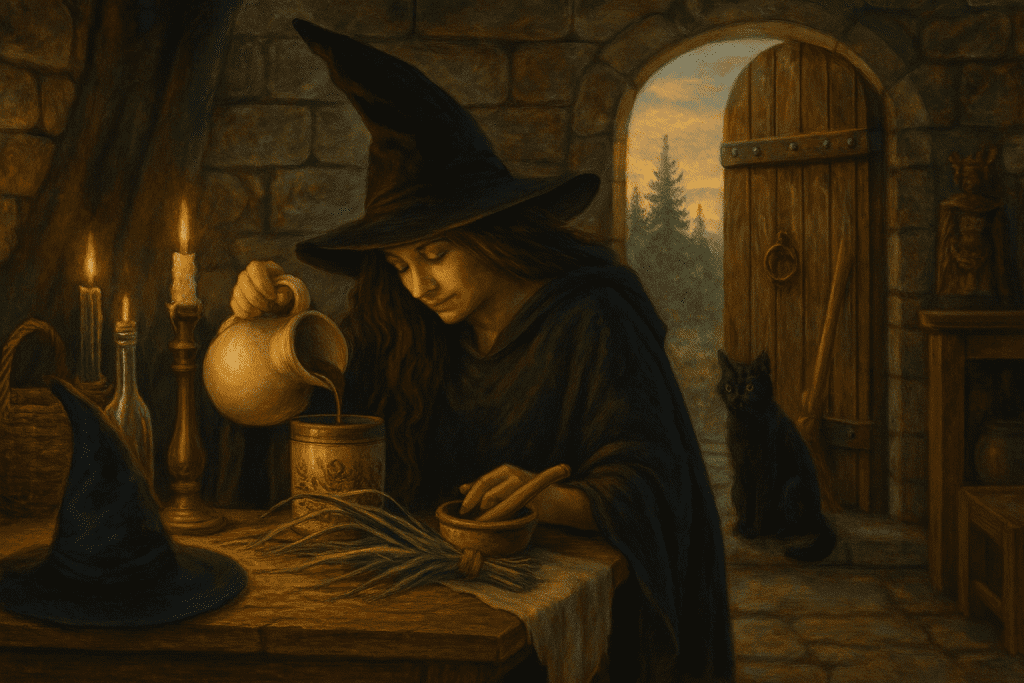
Beer is, without a doubt, one of the most popular beverages on the planet. Refreshing, versatile, and available in thousands of varieties, it accompanies everything from social gatherings to grand celebrations. But few know that its history, which dates back more than 7,000 years, is deeply linked to women… and to symbols that would later be associated with witchcraft: the peaked hat, the broom, and the cat.

símbolos de bruja
escoba de bruja símbolo de persecución
gato negro símbolo de brujería y brujas

In this article, you’ll discover how beer and witches intersected in the Middle Ages, how monks and male power displaced women from their role as master brewers, and how persecution transformed “female brewers” into “witches.”

The ancient origins of beer

The first archaeological evidence of beer production dates back to ancient Mesopotamia, around 5000 BC. The Sumerians, almost by accident, discovered the fermentation of barley and wrote recipes on clay tablets.

tablillas de arcilla de Mesopotamia orígenes de la cerveza

Later, in Egypt, beer became a sacred drink. It was used both in religious rituals and in the daily diet of nobles and workers. Its consumption was so common that it was considered a staple food.

Over the centuries, the tradition passed to the Greeks, Romans, Germans, and Celts. The latter perfected the recipe, incorporating cereals such as oats and wheat, as well as herbs and honey. However, the great transformation would come in the Middle Ages.

Monks and hops: the male dominance of beer

los secretos de la elaboración de la cerveza

In the Middle Ages, European monasteries became major centers of beer production.

There, monks began using hops, which gave the beverage a characteristic bitter taste and, in addition, greater stability and shelf-life.

But there was an important difference: while male monasteries were allowed to brew beer, female monasteries were prohibited.

The reason was simple: brewing beer was considered “unsuitable for women.”

This exclusion marked the beginning of women’s displacement from a trade they had practiced for centuries in their homes and communities.

Women Brewers: Brewsters and Alewives

los misterios de las brujas y las cervezas

Before production was monopolized by monks, it was women who brewed beer in homes and villages.

Many widows and single women found selling beer a form of economic independence at a time when job opportunities for them were almost nonexistent.

To advertise their products, these medieval breweries used symbols that we now associate with witchcraft:

  • The broom at the door: signaled that fresh beer was available for sale.
  • The peaked hat: helped them stand out in crowded markets.
  • The cat: served as a guardian of the grain from rats and pests.


Back then, these symbols were practical and commercial, with nothing to do with magic or the devil.

From brewers to “witches”: the persecution ersecución

As beer production became professionalized and dominated by men, the women who still brewed it became uncomfortable competition.

It was then that a smear campaign began: the symbols used by brewers began to be interpreted as signs of witchcraft. The broom ceased to be a simple sign and became the witches’ “flying instrument”; the pointed hat, a demonic mark; and cats, supposed allies of the devil.

During the 15th to 17th centuries, at the height of the witch hunt, thousands of independent women were accused, persecuted, and executed. Many of them were simple beer sellers.

Over time, the image of the woman with a pointy hat, broom, and cat became established as the archetype of the witch. A caricature constructed from fear, religion, and social control.

@margaritaarnalmoscardo

DE LA CERVEZA Y LAS BRUJAS-video-export-2025-09-03T11-06-21.115Z-video-export-2025-09-03T11-22-15.196Z

♬ sonido original - Margarita Arnal Moscardo - Margarita Arnal Moscardo

Today, however, history is beginning to be reclaimed. Academic research and feminist movements have reclaimed the role of women brewers in history.

Many modern craft breweries even adopt witch symbols as a tribute to those women who were persecuted for a profession that is now celebrated around the world.

The relationship between witches and beer reminds us how a domestic and profitable profession for women was demonized by economic, religious, and social interests.

Behind every sip of beer lies a heritage of thousands of years, shaped by monks and monasteries as well as by women who were unjustly accused of witchcraft.

So, every time we raise a cold mug, we can also toast them: the first female master brewers whose story deserves to be told and remembered.

0
    Your Cart
    Your cart is emptyReturn to Shop

    Fill in your details and download now the first chapter

    Introduce tus datos y descarga ahora el primer capítulo del libro

    Introduce tus datos y descarga ahora el primer capítulo del libro