
Göbekli Tepe is currently the oldest temple in the world. A temple is a place where a connection with divinity occurs. It is considered the oldest place of religious worship in the world. It is believed to have been built around 9000 BC, located in Turkey.
This temple is 6,500 years old, older than the pyramids of Giza. This site, dating back to the Neolithic period, is described as the first religious center on Earth. 20 temples have been discovered in the region and six have been unearthed to date.
As this discovery breaks all previously known schemes about the origin of civilization, saying that this complex would have been built by hunter-gatherers who traveled from 1 to 200 km around is quite ridiculous given the complexity of the archaeological find itself. It is worth mentioning the enormous stone blocks that speak for themselves of a civilization and advanced technology.
What we know so far about Göbekli Tepe
Before the excavations, it was thought impossible for a hunter-gatherer society to build something of such magnitude. However, Göbekli Tepe proves otherwise: it reveals a complex social organization, with architectural and artistic knowledge surprising for its time.
The reliefs include lions, bulls, wild boars, snakes, vultures and other animals, carved with remarkable precision. There are also few human figures, such as a crouching woman or decapitated bodies, which suggests ritual or funerary symbolism.
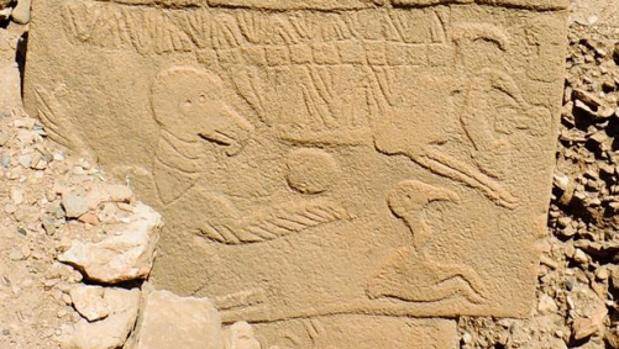
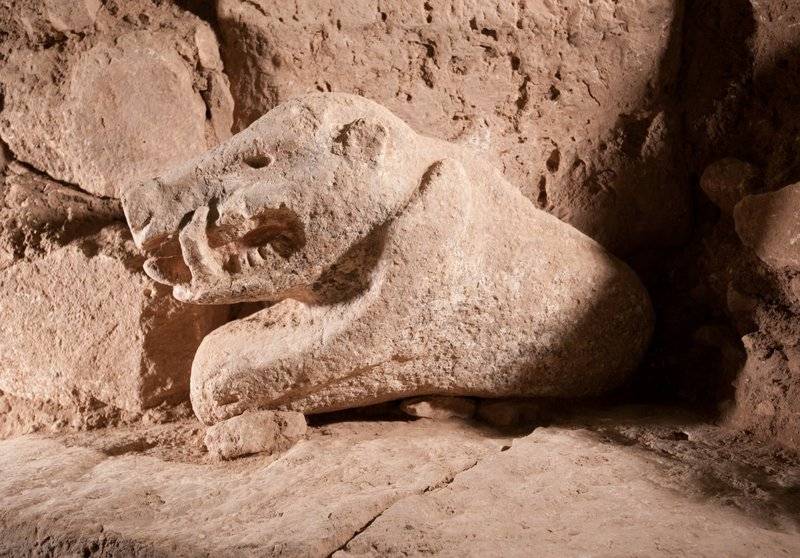
The archaeologist Klaus Schmidt proposed that this place functioned as a pilgrimage center, where communities of up to 150 km around gathered. Archaeological evidence indicates that the primary use of the site was ritual rather than residential, although small domestic buildings have recently been found.
Monumental construction and advanced technology
The architecture of Göbekli Tepe is based on circular buildings with dry-stone walls and monolithic pillars. The structures feature terrazzo (polished lime) floors and benches attached to the walls. Some unfinished columns have been found in the same quarry on the plateau, including one nearly 9 meters high.
Moving and erecting these stones required impressive logistics. It is estimated that more than 500 people must have been involved in the extraction and transport of each pillar, which weighed between 10 and 20 tons.
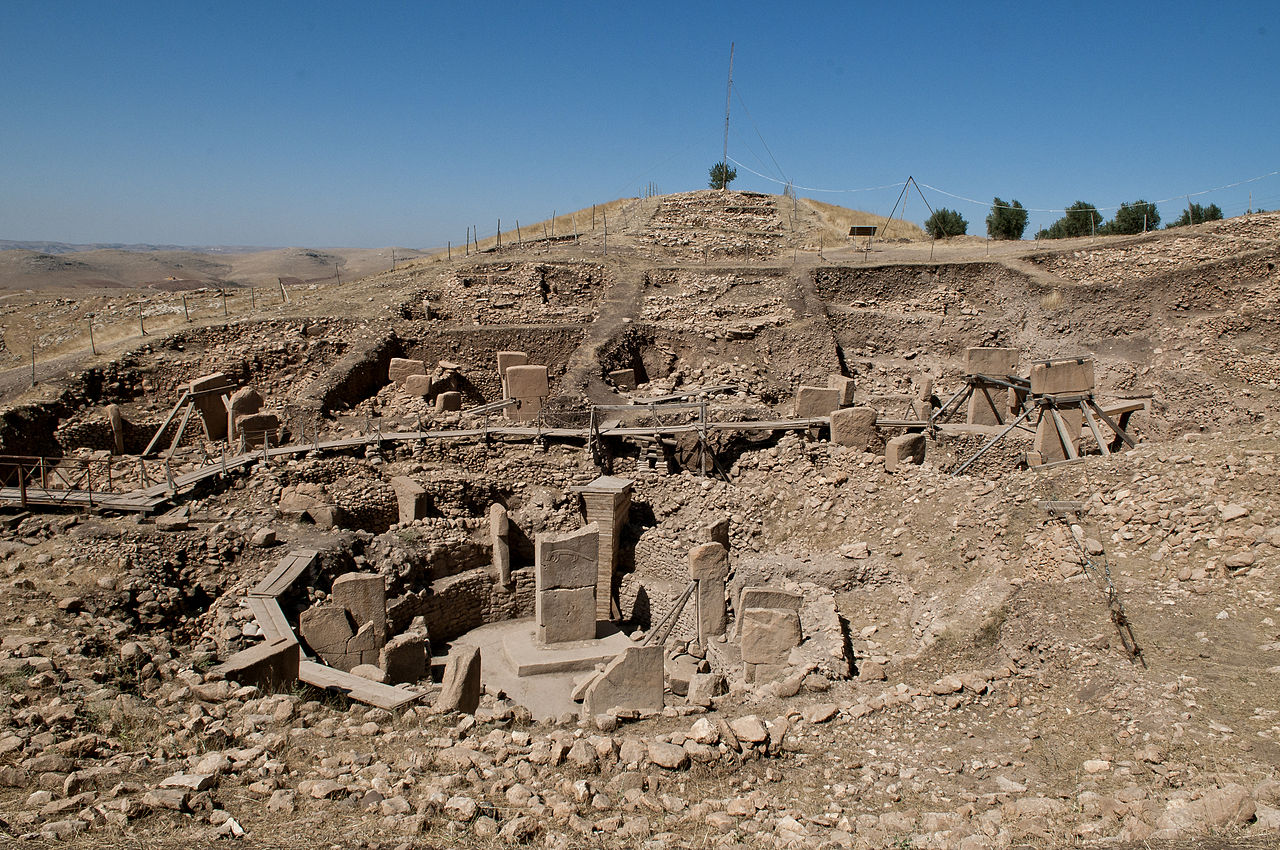
Interestingly, around 8200 BC, the site was abandoned and intentionally covered with rubble and earth. This deliberate action preserved the structures for millennia, but the reason for this is still not understood.
Recent research suggests that the builders of Göbekli Tepe were also astronomers. The study led by Martin Sweatman suggests that the “V”-shaped carvings on the pillars could represent a 365-day solar calendar, combining lunar and solar cycles—the oldest known lunisolar calendar. A specific symbol, shaped like a bird around a “V,” has even been interpreted as indicating the summer solstice.
@margaritaarnalmoscardo GOBEKLI TEPE, #crecimientopersonal #TAROT #BIOENERGIA #VISUALIZACION #MEDITACION #ZEN #psiquicas #VIDENCIA #HISTORIA #REENCARNACION #TIBET #VIAJEASTRAL #TAROTEGIPCIO #MARGARITAARNAL #ENERGIA #OVNIS #MEDIUM #CALENDARIOMAYA #profecias #biblias #curiosidadehistorica #arqueologiaprohibida #margaritaarnalmoscardo
♬ sonido original - Margarita Arnal Moscardo - Margarita Arnal Moscardo
Although most experts consider it a temple, archaeologist Edward Banning proposed an alternative hypothesis in 2011:
that the structures could have been large communal houses, similar to the wooden ceremonial dwellings of the Northwest coast of North America.
Regardless of its exact function, Göbekli Tepe represents a milestone in human history:
a construction that predates agriculture, pottery, writing, or the wheel, erected by seemingly “primitive” societies that mastered a complexity cultural, symbolic and technical much more advanced than previously thought.
Bibliography and links of interest
Hispanatolia (2014) “Farewell to Kalus Schmidt, the man who revealed the secrets of Göbekli Tepe”, in https://hispanatolia.com/adios-a-klaus-schmidt-el-mujer-que-revelo-los-secretos-de-gobekli-tepe/
Martin B. Sweatman, and Dimitrios Tsikritsis (2017) “DECODING GÖBEKLI TEPE WITH ARCHAEOASTRONOMY: WHAT DOES THE FOX SAY?”, in
https://www.maajournal.com/index.php/maa/article/view/686
Edward Bruce Banning
University of Toronto (2011) “So Fair a House: Gobekli Tepe and the Identification of Temples in the Pre-Pottery Neolithic of the Near East”, in https://www.researchgate.net/publication/259561913_So_Fair_a_House_Gobekli_Tepe_and_the_Identification_of_Temples_in_the_Pre-Pottery_Neolithic_of_the_Near_East