
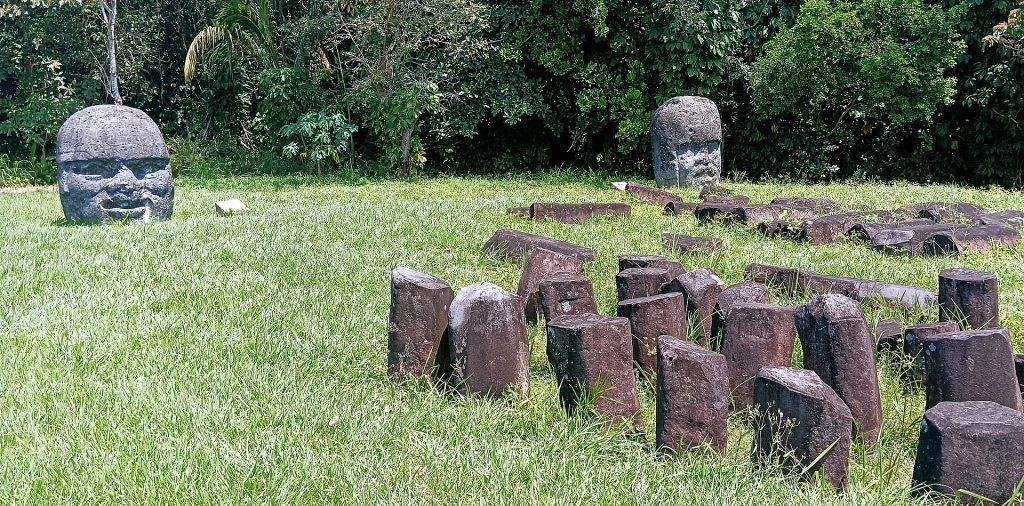
The Olmec civilization remains one of the greatest enigmas of the American past. Considered the “mother culture” of Mesoamerica, its influence marked the beginning of the great civilizations that followed, such as the Maya, Zapotec, and Mexica.
Between 1200 BCE and 400 BCE, the Olmecs flourished on the Gulf Coast of Mexico, primarily in the present-day states of Veracruz and Tabasco, leaving an artistic and spiritual legacy that still amazes archaeologists and those curious about mysteries.
The origins of the Olmec civilization
Although its peak is traditionally placed between 1200 and 400 BC, some remains indicate that its development may have begun around 2000 BC.
Its main ceremonial centers were San Lorenzo, La Venta, and Tres Zapotes, true planned cities with an advanced social and architectural organization.

The Olmecs were exceptional hydraulic engineers, architects, and artists, capable of building pyramids, temples, and canals in the middle of a tropical rainforest. They were also pioneers in the use of latex extracted from the rubber tree, invented the Mesoamerican ballgame, and established trade routes that reached as far as Oaxaca, Guatemala, and even beyond.
Olmec art, religion, and worldview
The Olmec spiritual world revolved around nature. Their religion was polytheistic, and their gods represented elemental forces such as rain, earth, and sacred animals. Among their most important deities were:
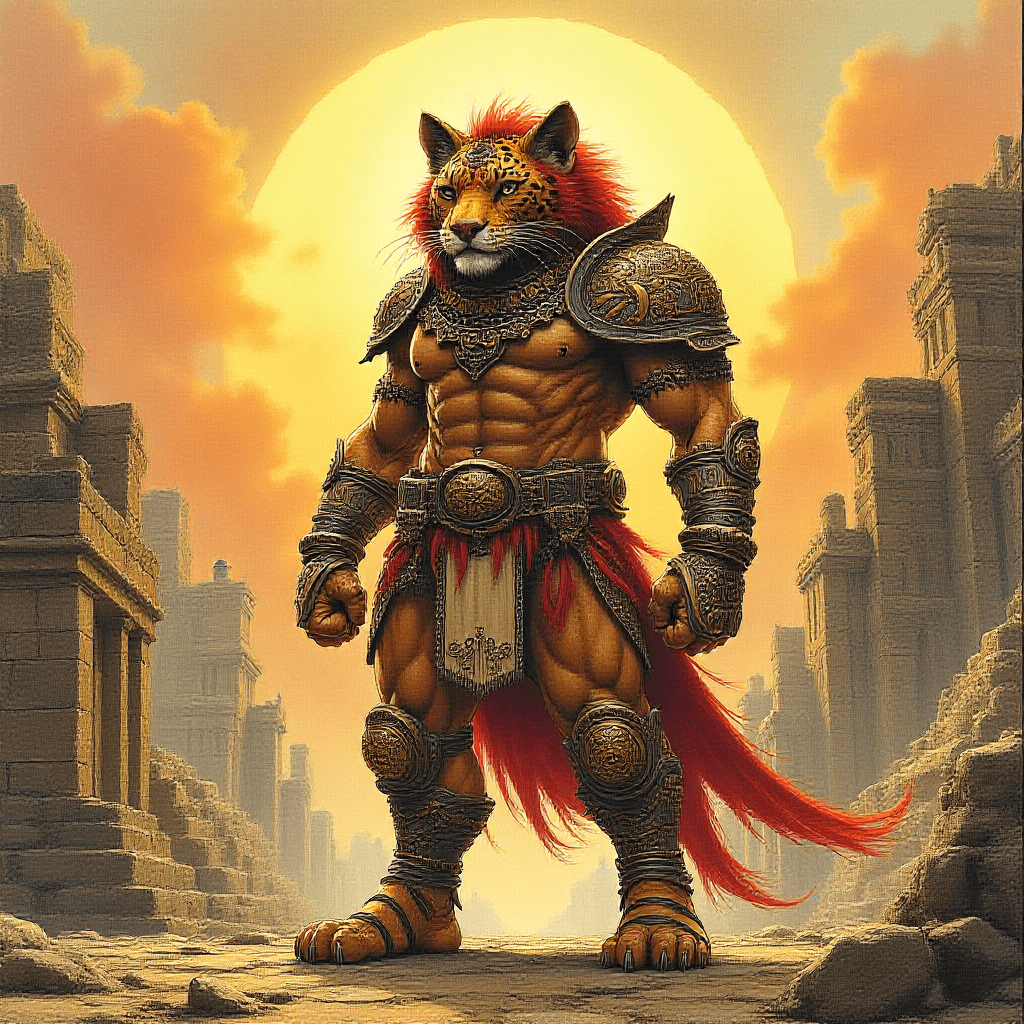
The jaguar god, symbol of power, fertility, and connection to the underworld.
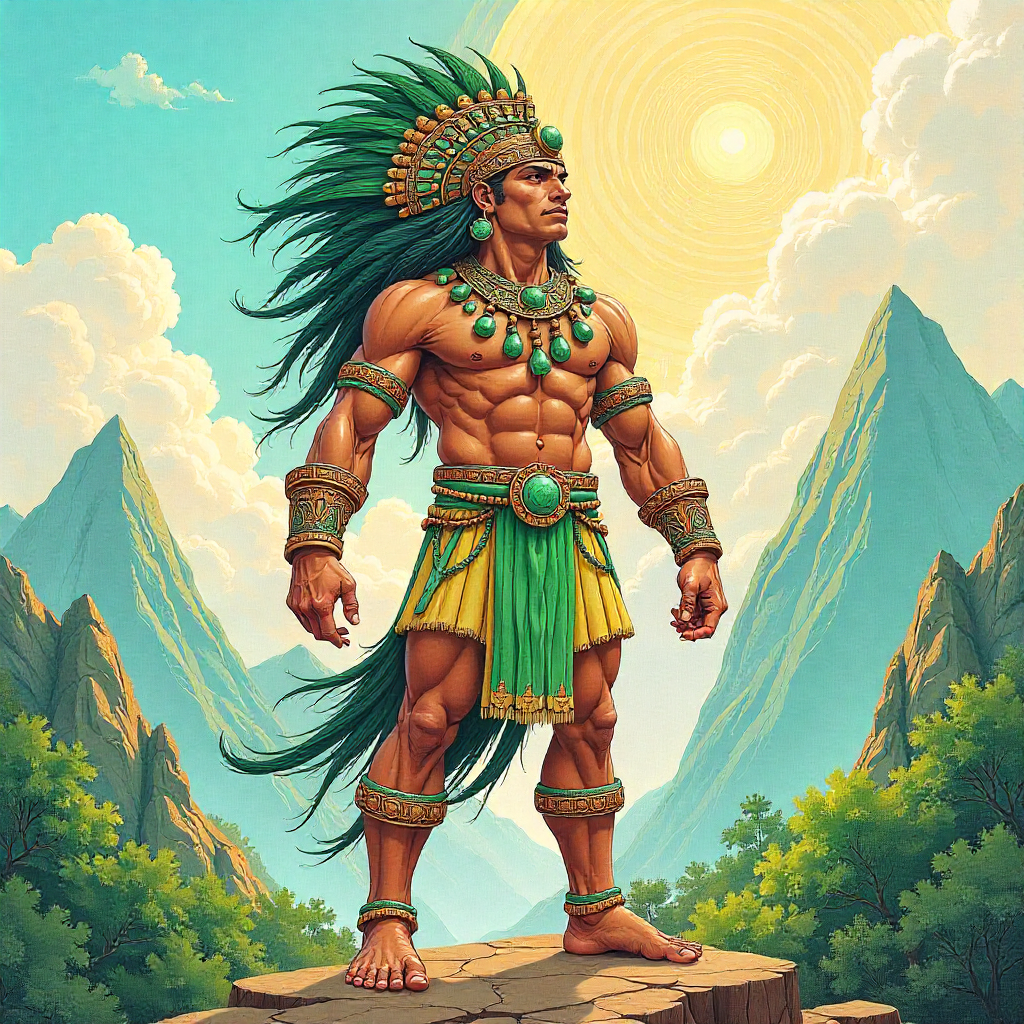
The spirit of rain, associated with abundance and the cycle of life.
For the Olmecs, death was not an end, but a journey to other worlds, where the soul was reborn as a seed that nourished the living. This cosmic vision influenced all subsequent Mesoamerican cultures.
Mystery of the Olmec heads
Nothing better represents the genius and Olmec mystery than their colossal heads, monumental sculptures that defy the logic and technology of their time.
To date, 17 gigantic heads have been discovered:
- 10 in San Lorenzo,
- 4 in La Venta (Tabasco),
- 3 in Tres Zapotes (Veracruz).
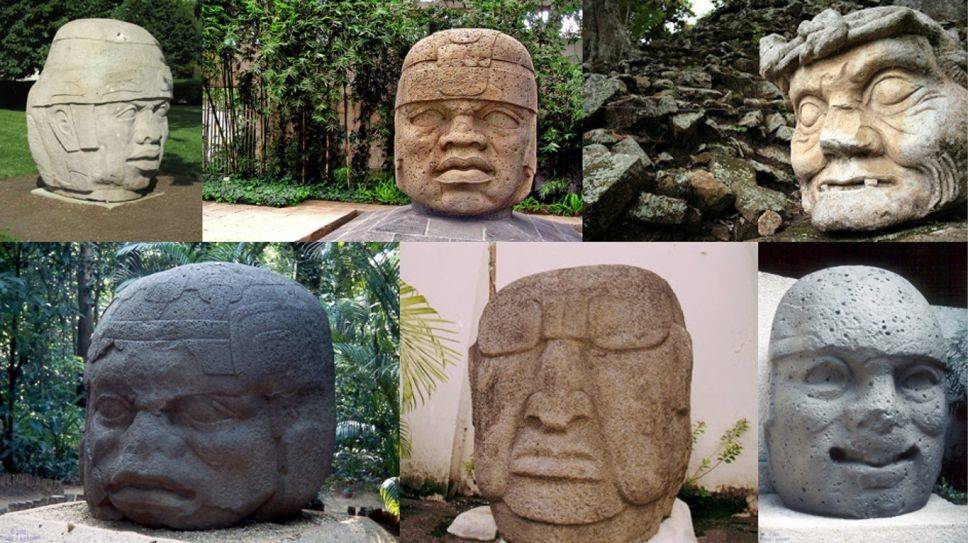
These sculptures, carved from volcanic basalt, reach up to 3.4 meters in height and can weigh more than 50 tons. The smallest exceed 25 tons, and all were carved from a single piece, transported from quarries located between 50 and 100 km away in the Sierra de los Tuxtlas.
The most enigmatic aspect is that the Olmecs did not know the wheel nor did they have pack animals, making their transport an almost superhuman feat.
Each head displays unique and realistic features, suggesting that they represent specific leaders. Strabismus, present in several of them, was considered a sign of beauty or divine rank within their culture.
Magnetic heads and energy enigmas
Beyond their size and technical perfection, the Olmec heads conceal a magnetic mystery that intrigues modern scientists.
Several researchers, such as Michael D. Coe, have discovered that many of these sculptures possess anomalous magnetic fields that affect compasses, especially in areas like the nose, cheeks, and jaw.
In 2019, a group of Harvard researchers published a study on the stone heads found in Guatemala, specifically in Escuintla and Monte Alto, known as the “potbellied ones.”
These sculptures, dating back to around 1800 BCE, exhibit magnetism levels up to four times higher than expected, as measured with magnetometers.
The magnetism is concentrated in specific points (such as the temples, navel, or mouth), suggesting that the ancient sculptors knew about and intentionally manipulated these properties.
@margaritaarnalmoscardo MAGNETISMO EN PIEDRA#margaritaarnal #sonido #vibracionessanadoras #crecimientopersonal #zen #vibracionespositivas #sanarconsonido #meditacion #historia #historiaoculta #TUNELESMEDIEVALES #templarios #Cataros magnetismoenpiedra #energiaelectromagnetica sanacionmagnetica #energia #bioenergia
♬ sonido original - Margarita Arnal Moscardo - Margarita Arnal Moscardo
Magnetism as a Possible Healing Tool
Some contemporary authors propose that the Olmecs applied magnetism for therapeutic purposes, in the same way that magnetic field therapy is used today in alternative medicine.
It is believed that the poles of the magnet had opposite effects:
The south pole provided heat and pain relief,
While the north pole generated vitality and energy.
Although these ideas remain speculative, they open a fascinating debate about the level of energetic and scientific knowledge that the Olmecs may have reached thousands of years before our era.
Mesoamerican Culture, Society, and Legacy
The Olmec society was Stratified: at the top were the rulers and priests, followed by artisans, merchants, and farmers. Among their most notable achievements are:
- The first Mesoamerican calendar and a hieroglyphic writing system.
- The use of rubber and the development of the ritual ballgame.
- The construction of pyramids and temples that inspired later cultures.
- The cultivation of cacao and the first forms of ceremonial chocolate.
- The use of chapapote (natural petroleum) to seal boats and structures.
Their influence spread throughout Mesoamerica thanks to trade, consolidating them as one of the most important cultures on the continent.